How to Configure Instruction Control for Alarm Monitoring System Application at xPortalNet Client

How to Configure Instruction Control for Alarm Monitoring System Application at xPortalNet Client

Problem (Issue) Statement:

How to configure Instruction Control for alarm monitoring system application at xPortalNet Client

Description:

A guide to configure Instruction Control for alarm monitoring system application at xPortalNet Client.

Related Software:

  • xPortalNet v1.5.0.122

Related Hardware:

  • XP-SNETv2 v3.48

  • XP-SNET-E32R

  • XP-SNET-E248

System Application:

Alarm Monitoring System

Symptom and Finding:

NA

Cause:

For first time configuration on Instruction Control for alarm monitoring system application at xPortalNet Client

Solution:

Warning!

  • Users are not recommended to run any xPortal software in Windows XP operating system as the system is unstable

  • Users are also advised to stop the xPortal Services before shutting down the Server PC to prevent any missing transaction issues.

.

.

Warning!

The XP-SNET controller will not send fire alarm signal over to the connected XP-SNET-E32R and/or XP-SNET-E248 extension boards if the configuration settings for the XP-SNET controller is not completed.

Complete the configuration settings for XP-SNET controller in order for XP-SNET-E32R and/or XP-SNET-E248 to respond accordingly to fire alarm signals.

.

.

Summary


Step by Step:

  • Ensure that the xPortalNet Services is Running:

Step 1: Open xPortalNet Comm Service.


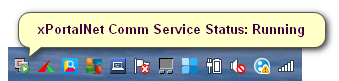
Step 2: Ensure that the xPortalNet Comm Service Status is Running.


Figure 2: xPortalNet Comm Service Running pop-up message


  • Ensure that the alarm monitoring controller settings are configured in xPortalNet Server:

Knowledge Base Link

Users can refer to How to Setup Alarm Monitoring System Application Using XP-SNET Controller at xPortalNet Server for the complete procedures.


  • To configure Instruction Control setup at xPortalNet client:

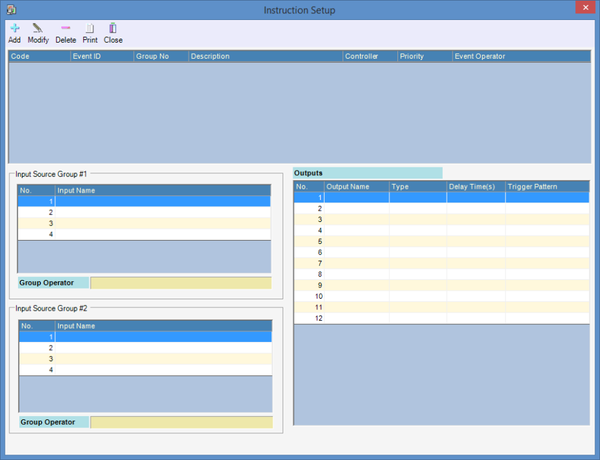
Step 1: Go to xPortalNet Client > System Setting > Instruction Control. The Instruction Setup window will be shown as below:


Figure 1: Instruction Setup Window


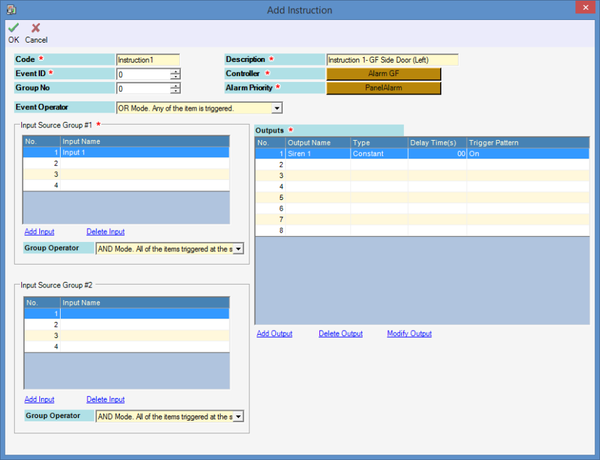
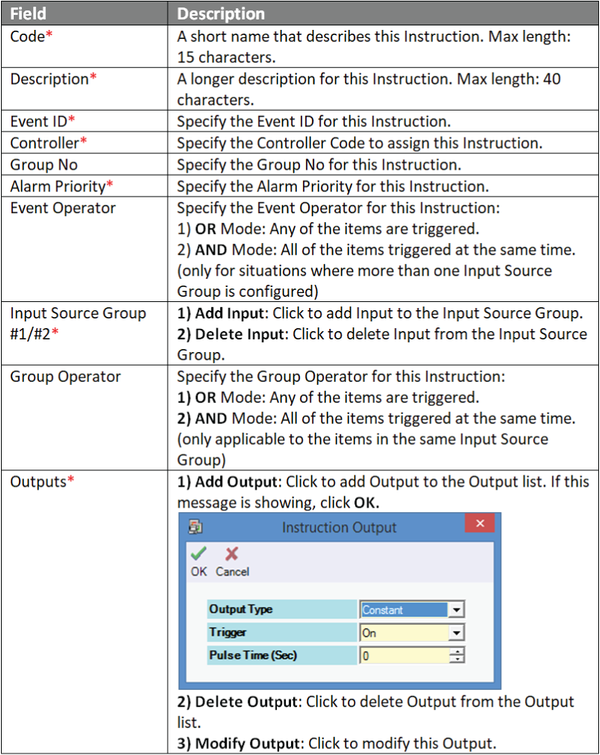
Step 2: Click Add to create a new instruction. The Add Instruction window will be shown as below. Fill in the respective fields and click OK to save changes.


Figure 2: Add Instruction Window


Note

  • represents required field

  • Users can add up to a maximum of 8 Inputs and Outputs in one Instruction Setup.


Step 3: Repeat steps 1 and 2 to add additional Instruction Setups as necessary.

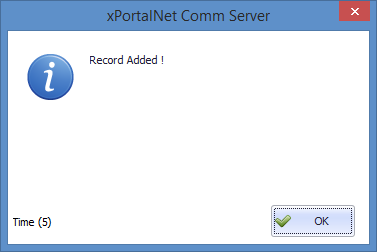
Step 4: The following message window will be prompted to show that Record is Added. Click OK to continue.


Figure 3: Record Added Window


  • To send Door Settings to Controller after completing the configuration:

Step 1: After completing the configuration settings, users MUST send all settings to the controller.


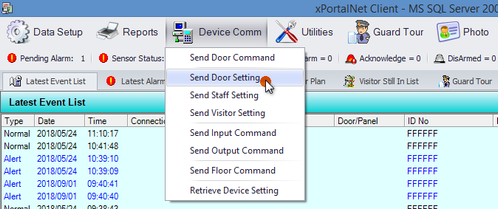
Step 2: Go to Device Comm > Send Door Setting.


Figure 4: Send Door Setting Button


Step 3: Select the controller to send all settings. Click Send All Settings to send all configuration settings to the selected controller.


Step 4: The Delivery Report will be prompted. Ensure that software have sent all configuration settings successfully.


  • To observe the device status:

Step 1: To check the status of the controller, go to xPortalNet Client > Device List > Controller List to verify that the controller Status is Up.


Figure 5: Controller List under Device List tab


Step 2:To check the status of the alarm controller, go to xPortalNet Client > Device List > Alarm Controller List to verify that the alarm controller Status is Up.


Figure 6: Alarm Controller List under Device List tab


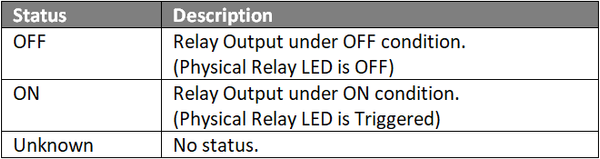
Step 3: To check the status of the output, go to xPortalNet Client > Output List to observe the output status.


Figure 7: Output List under Device List tab


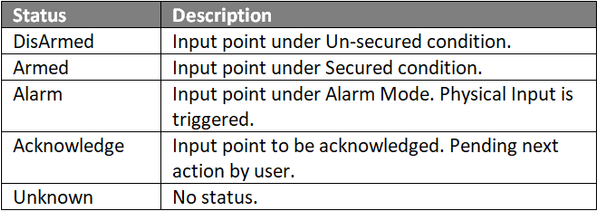
Step 4: To check the status of the input, go to xPortalNet Client > Input List to observe the input status.

Figure 8: Input List under Device List tab

Date Documentation:

24/5/2018 (Rev 1.0)

© MicroEngine Technology Sdn Bhd (535550-U). All rights reserved.